

I spent years in classrooms before transitioning into the world of education technology, and I can tell you that the compliance paperwork struggles I watched teachers manage are not all that different from what school psychologists face today, except, with ballooning mental health and literacy crises, the stakes are higher, the caseloads are heavier, and the solutions being offered are far more inadequate.
Right now, school districts across the country are watching their school psychologists burn out, walk away, or count down the days to retirement. And the most common response I hear from district leadership? "We're offering a stipend."
I understand the instinct. Money matters. But a stipend is a band-aid on a wound that requires surgery. If we are serious about retaining school psychologists, and we must be, then we need to talk honestly about what is actually driving them out the door.
The Scope of the Crisis Is Hard to Overstate
The numbers paint a grim picture. The actual psychologist-to-student ratio in U.S. public schools sits at roughly 1,071-to-1. The National Association of School Psychologists recommends 500-to-1. Nearly half of all school districts in the country fall below that threshold. Meanwhile, 90% of school psychologists report experiencing professional burnout, and more than half have seriously considered leaving the profession entirely.
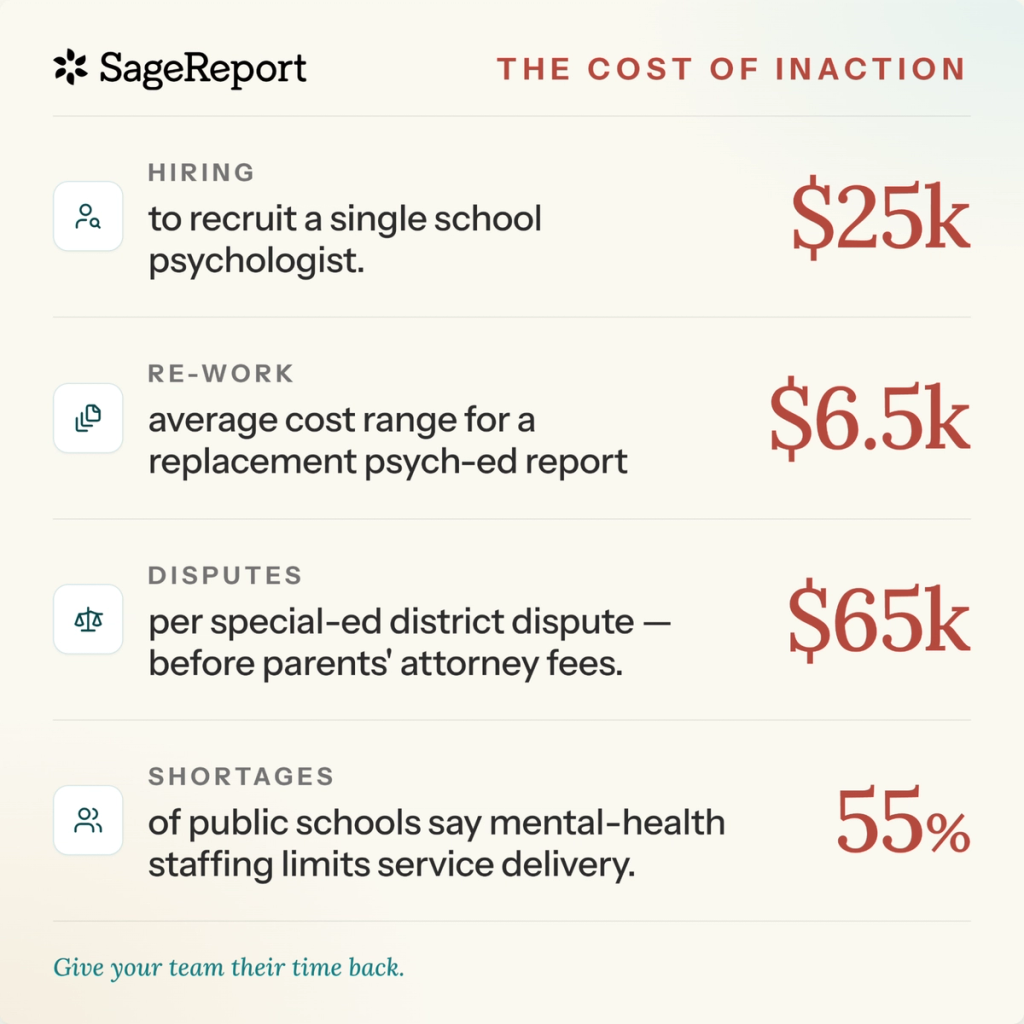
This is not a pipeline problem alone. This is a recruiting problem for districts with uncompetitive salaries, and it is rooted in something that a few extra dollars per month will not fix.
Consider what a typical school psychologist's week actually looks like. They spend an average of 7.65 hours writing a single psychoeducational report. A full quarter of school psychologists report spending more than 10 hours on a single report. That documentation burden adds up to roughly 345 hours lost to paperwork every single year, per psychologist. And in that same year, they are averaging just 3.3 hours per week of direct student support services.
Think about that for a moment. These are highly trained clinicians, people who went to school for years specifically to help children, support families, and guide teachers, and they are spending the overwhelming majority of their professional energy on documentation. Not on kids. On paperwork.
A stipend doesn't change the impact or reverse the feelings of ineffectiveness. It just pays them more to keep suffering through it.
What School Psychologists Are Actually Telling Us
When I talk to school psychologists across the country, the frustration I hear most consistently is not about salary. It's about their time and how they were trained to do one thing and are instead doing something else entirely. It's about missing at-risk counseling sessions or parent training opportunities to meet IEP deadlines when a report takes three times longer than expected. It's about staying late, giving up weekends, and still feeling like the work is never finished and still having limited impact.
And it's about liability. Districts may not always feel this acutely until a due process complaint lands on their desk, but school psychologists feel it every time they submit a report. They know if any supporting evidence is missing, a due process complaint could consume their free time for the year.
What school psychologists want, at their core, is to do their jobs well and feel supported in doing so. When that support is absent, no stipend will attract nor retain them.
What Actually Moves the Needle
This is where I have to be direct, because I believe it deeply: SageReport moves the needle.
Not because it is a clever product. Not because it has slick branding. But because it was built by school psychologists, for their teams, and it addresses the actual root cause of why these professionals are leaving the field.
SageReport takes a single upload and generates a fully integrated, district-aligned psychoeducational report draft in minutes. Not hours, minutes. That means a clinician who previously spent an entire day on documentation can now spend that time doing what they were trained to do: thinking deeply about results, sitting with students, consulting with teachers, supporting families. That is not a marginal improvement in quality of professional life. That is transformational.
When Atlanta Public Schools piloted SageReport across their district, 55 of 55 psychologists opted in. Within that pilot, 93% of participants reported reduced overall burnout and all leadership surveyed reported an increase in report quality. Districts don't get those numbers by offering people more money. They get those numbers by giving people back their professional dignity.
A Message to District Leaders
If you are a superintendent, a director of special education, or a district administrator trying to figure out why you keep losing school psychologists, I want you to sit with this question: Are you offering them support that changes the nature of their daily work, or are you offering them money to tolerate the same broken conditions?
Stipends are a nice gesture, but they aren't a retention strategy. True retention requires sustainable, long-term support.
A genuine retention strategy means looking honestly at why these professionals are burning out and addressing those causes directly. It means giving them tools that honor the training they worked years to earn. It means reducing the administrative weight that is pulling them away from students.
School psychologists went into this field because they care about students. Every hour spent formatting tables and chasing compliance standards is an hour not spent with a child who needs them. When you give school psychologists their time back, you are not just improving their job satisfaction. You are improving outcomes for the most vulnerable students in your district.
That is what SageReport is built to do. And in my experience, as a former educator and someone who has spoken with hundreds of school psychologists across this country, it is the kind of support that actually makes people happy to come to work.
Learn more at www.sagereport.com/districts/
Thomas McMullen, M.Ed., is Sr. Director of District Partnerships at SageReport and a former teacher. He can be reached at thomas@sagereport.com or 323.400.5433.